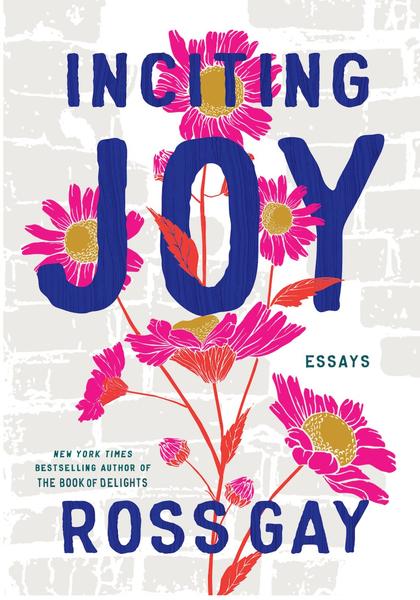
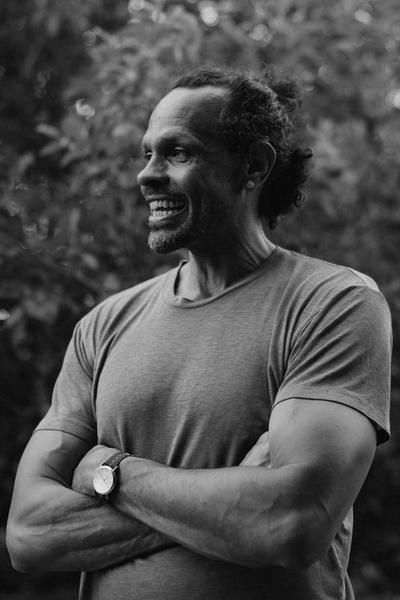
I've been thinking about what joy looks like in a time of civic upheaval. I'm a big fan of the poet and essayist Ross Gay (who is also a gardener, orchardist, teacher, athlete, skateboarder, and a bunch of other things) and I've been reading (again) his book of
essays Inciting Joy (see the “Book Worth Reading” featured below). He doesn't view joy in isolation from tragedy, suffering, even death. For him, the joyous, the tragic, the merely boring are all tied up together. Not in the silver-lining-when-bad-things-happen sort of way, but more in a deepening of life’s experiences.
Pursuing joy seems almost shameful as thousands of the most competent and dedicated federal
employees are suddenly jobless, when decades of hard-fought gains in protecting the environment are swept away by presidential fiat, as core principles of nearly a quarter millennium of American democracy are routinely disregarded and mocked. But far from being a luxury of privilege, joy is our best hope for the future.
Unlike so many things in our hyper-consumerist society, joy cannot be hoarded, made scarce, or
monetized (though many monetized products and experiences promise to bring joy)—it comes from oneself and is abundantly available to all. But mostly, as Ross Gay’s essays demonstrate in so many ways, joy is aspirational. Our best future is a joyful future.
And a joyful future is a future worth fighting for, a future worth working for in every way possible. And not just your joy or my joy, but a joyful world for
all.
I have great hope that joy may be the most powerful resistance to the meanness, ignorance, thuggery, and arrogance of the current administration’s approach to governance. I truly believe joy will overcome, that a joyful world will be the earth’s inheritance. At least, that’s what I find worth working toward.
Wishing you a joyful day,
Tom
Photo essay
Fernhill Wetlands: From Human Waste to Thriving Life: This photo-essay features the birds, flowers, and
scenery of the Fernhill Wetlands on the outskirts of Forest Grove in the wine country west of Portland, Oregon. Human waste nourishes this slice of wildness amid the sprawl of industrial America. The local water treatment plant dumps its effluent into the ponds, lake, and marshes of the wetlands. (Read time 6 minutes)
Other arches are more famous and get more attention—especially Delicate Arch, which is highlighted on the license plates
of Utah automobiles—but I'm partial to Double Arch in Arches National Park. Two conjoined arches make up this feature that is the tallest arch in the park and the second longest (behind Landscape Arch, another of my favorites, which is the longest natural arch in North America). You can view more Arches National Park images in the photo gallery.
This collection of essays explores joy, specifically incitements to experiencing joy, in topics from skateboarding to gardening to pop music to pick-up basketball to creating a community
orchard—a lot of life, some death (or specifically, remembering those who have passed), plenty of humor, an abundance of social commentary all mashed up in joyful observations. These thoughtful, thought-provoking essays are a thoroughly enjoyable read.
The Inner Puritan
After enthusing about Ross Gay’s collection of essays, I need to remind myself that he is also, or mostly, a poet. And like his essays, his poetry ranges over many
topics with both a lyrical and a critical voice. I like to think of him as a nature poet, a composer of ecopoetry, but he’s much more than that. Many of his poems are quite long, including the book-length poem Be Holding about a single basketball shot by the ‘76ers great Dr. J (Julius Erving). You must read it to appreciate how Gay’s genius turns a moment that lasted a second or two into a single poem of 98 pages. In the poem featured here, he considers the puritanical streak in his
character, and by extension in every American’s character to some extent.
ode to the puritan in me
There is a puritan in me the brim of whose hat is so sharp it could cut your tongue out with a brow so furrowed you could plant beets or turnips or something of course good for storing he has not taken a nap since he was two years old because he detests sloth above all he is maybe the only real
person I’ve ever heard say “sloth” or “detest” in conversation he reads poetry the puritan in me with an X-Acto knife in his calloused hand if not a stick of dynamite and if the puritan in me sees two cats making whoopee in the barn I think not because they get in the way or scare the crows but more precisely because he thinks it is worthless the angles of animals fucking freely in the open air he will blast them to smithereens I
should tell you the puritan in me always carries a shotgun he wants to punish the world I suppose because he feels he needs punishing for who knows how many unpunishable things like the times as a boy he’d sneak shirtless between the cows to haul his tongue across the saltlick or how he’d study his dozing granny’s instep like it was the map of his county or the spring nights he’d sneak to the garden behind the sleeping house and strip naked while upon him
lathered the small song of the ants rasping their tongues across the peonies’ sap, making of his body a flower-dappled tree while above him the heavens wheeled and his tongue drowsed slack as a creek, on the banks of which, there he is, right now, the puritan in me tossing his shotgun into the cattails, taking off his boots, and washing his feet in that water.